 Comparison
Are Professional Moving Companies Worth It for Local Moves?
Last Updated: October 28, 2026
Quick Summary
Professional movers are often worth it for local moves when heavy furniture, stairs, tight schedules or limited help make a DIY move risky or exhausting. Labor and surcharges drive the price, so compare a professional quote against a DIY estimate that includes your time and physical effort.
- Labor hours are usually the dominant cost in a professional local move.
- Stairs, long carries and elevator reservations often add surcharges on moving day.
- Ask whether a quote is binding, nonbinding or binding-not-to-exceed before booking.
- Basic released-value coverage is usually included but pays very little per pound.
- Hire movers for heavy furniture, multiple stairs, tight deadlines or limited help.
Table of Contents
- Professional Movers Versus a DIY Move for a Local Move
- Local Moving Costs: What You Actually Pay for Each Option
- DIY Move vs. Hiring Movers: Time, Effort and Physical Toll
- When Hiring Movers Is Worth the Cost
- When a DIY Move Makes More Sense
- Getting and Comparing Local Moving Company Quotes
- Booking Your Local Move: Choosing Between Full Service and Partial Help
- Frequently Asked Questions
Moving across town sounds simple until you start counting boxes, booking a truck and pricing out the labor. For many South Florida households, the real question is whether professional movers justify their cost for a move within Palm Beach, Broward or Miami-Dade counties. The honest answer is that it depends on your belongings, your time, and how much physical work you can absorb. This guide walks through the trade-off plainly.
We will compare hiring movers with a DIY move, look at what each option really costs, and show when each one makes sense. Even a local moves involve heavy furniture, stairs, tight elevators and a tight schedule, so the planning matters.
Professional Movers Versus a DIY Move for a Local Move
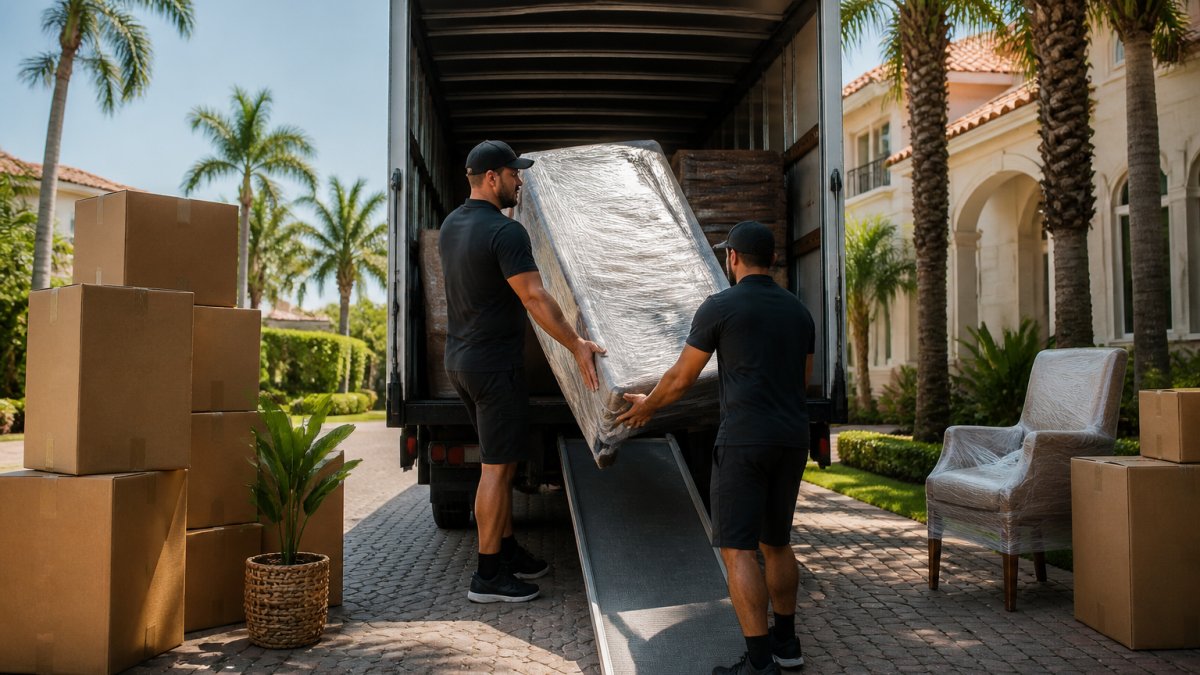
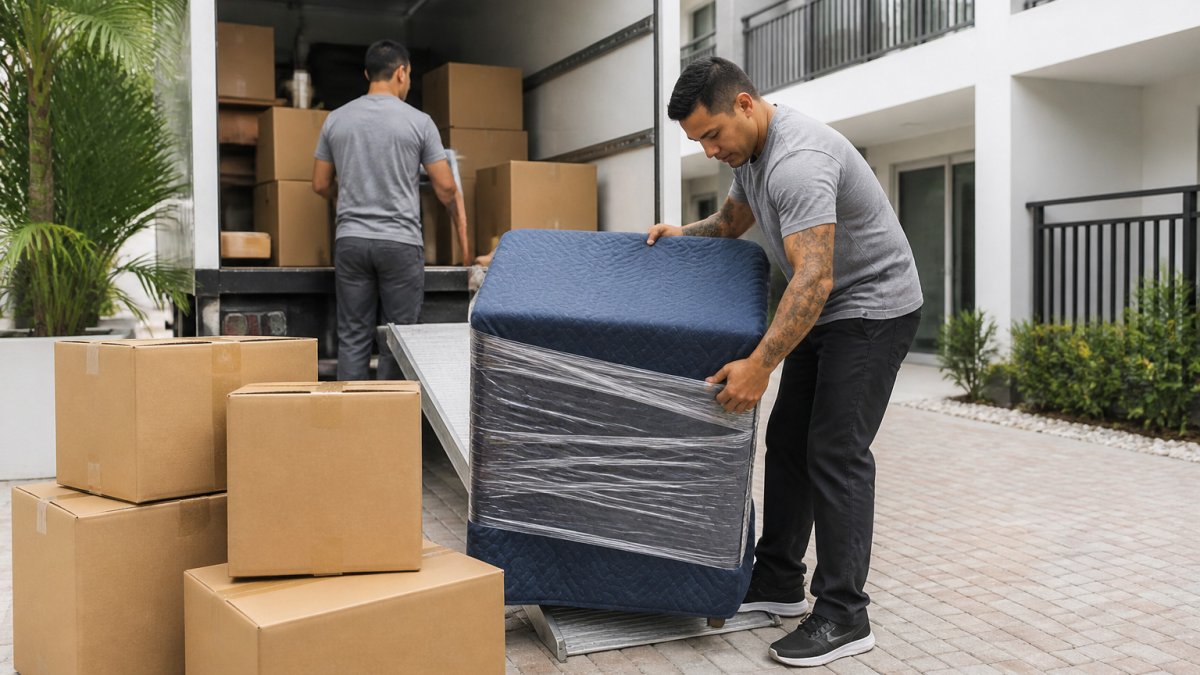
A DIY local move means you rent a truck or container, recruit help and do the loading, driving and unloading yourself. A professional move means a company supplies the crew, the equipment and usually the protective materials. The trade-off is simple: you pay for labor and convenience, and you keep control of the budget and schedule.
For local moves, the gap depends on the move. Distance is short, so the biggest costs are usually labor hours and the truck. Heavy items can affect the difference between options. Professional crews may handle narrow hallways and heavy items, but the specific services and methods available vary.
Good Movin’ offers full-service moving and labor support.
Local Moving Costs: What You Actually Pay for Each Option
Local moving pricing depends on the move. To compare a professional move against a DIY move, consider the costs on both sides. Below are factors to consider for each option.
What a professional local move typically includes
- Labor hours (the dominant cost). Most local movers bill hourly per mover with a minimum, commonly a two- or three-hour minimum, plus a truck charge. A two-mover crew and a three-mover crew are priced differently, and the larger crew usually finishes faster, so the total can land close even though the hourly rate is higher.
- Travel fee or trip charge. A flat fee covering the drive from the mover's facility to your origin and back from your destination. It is separate from the hourly clock and is often quoted as a single line.
- Truck charge. Some companies fold the truck into the hourly rate; others bill it separately. Ask which model applies, because it changes how the total scales with time.
- Stairs, long carry, and elevator fees. Walk-ups above the ground floor, carries over a set distance from truck to door, and building elevator reservations can each add a surcharge. These are the most common source of a quote that grows on moving day.
- Packing and materials. Full packing, partial packing (fragile-only), and unpacking are usually priced separately, along with boxes, tape, stretch wrap, and mattress bags.
- Disassembly and reassembly. Beds, large desks, and wall-mounted items are commonly billed as add-ons.
- Valuation coverage. Basic released-value coverage is typically included at no extra charge but pays very little per pound. Full-value protection is an upgrade with a real price.
- Tip. Customary but not mandatory; many households budget a gratuity per mover for a well-run job.
What a DIY local move actually costs
- Truck rental. A local one-way or in-town rental is priced by the day plus mileage, and the rate jumps on weekends and at month-end. Fuel is on you, and the tank usually must be returned full.
- Moving supplies. Boxes, tape, bubble wrap, stretch wrap, mattress bags, and furniture blankets add up quickly for a two- or three-bedroom home.
- Equipment. Dollies, straps, and floor runners are either rented or bought.
- Tolls and parking. Easy to forget, especially on a second trip.
- Helper costs. Meals, drinks, and sometimes a paid day for friends who take time off work.
- Your time and risk. The hours you spend packing, loading, driving, and unloading have a real value, and a single back strain or dropped dresser can wipe out the savings.
The break-even question
The comparison is not simply "movers cost more than a truck rental." Consider the cost alongside the time and physical work involved. Price both sides on the same worksheet.
Request a quote from Good Movin' for your move.
The table below lists the main cost items on each side, so you can compare a professional quote with a DIY estimate.
| Cost item | Professional move | DIY move |
|---|---|---|
| Labor | Hourly per mover, often 2-3 hour minimum | Your time plus helper costs |
| Travel | Flat trip charge | Fuel and tolls |
| Truck | Included in hourly rate or billed separately | Rental priced by day and mileage |
| Stairs and elevator | Surcharges on moving day | Your physical effort |
| Packing supplies | Priced separately or included | Boxes, tape, wrap, blankets |
| Valuation coverage | Basic included, full value is an upgrade | Not applicable |
DIY Move vs. Hiring Movers: Time, Effort and Physical Toll
Time is one factor to consider when deciding whether to hire professional movers. The time required for a move depends on the move and the people involved.
Physical toll is harder to put a price on. Physical work is another factor to consider when planning a move.
Stress matters too. Coordinating a move can add to the work involved.
How Long a Local Move Takes Each Way
The time required for a local move depends on the belongings, access, and other details of the move. Plan for the time needed to pack, load, travel, and unload.
Get Started Today →
When Hiring Movers Is Worth the Cost
Professional movers usually make sense in several situations:

- Heavy or bulky furniture such as pianos, solid wood dressers, large sectionals or glass tables
- Multiple flights of stairs or no elevator, which raise the physical load
- Tight time windows, such as a lease handover or a job start date
- Valuable or fragile items that need proper padding and handling
- Limited help, when you cannot recruit enough strong adults for a safe DIY move
- Work or family demands that leave you little time to plan and pack
In these cases, consider the cost alongside the time and physical work involved in doing it yourself.
When a DIY Move Makes More Sense
A DIY move may suit people with a small amount to move, reliable help, and time to plan.
A DIY move may suit people who enjoy planning and are comfortable with physical work. Consider your limits when deciding what work to take on.
Getting and Comparing Local Moving Company Quotes
When reviewing a local move quote, consider what it covers and ask questions about anything that is unclear.
Binding versus nonbinding estimates
- Nonbinding estimate. The mover gives a good-faith projection of cost. The final bill can come in higher if the job takes longer or weighs more than projected. It is the most common type for local hourly moves, where the clock drives the total.
- Binding estimate. The mover commits to a price for the services listed, regardless of how long the job takes, provided the inventory and conditions you described are accurate. If you add items or the access changes, the price can be adjusted.
- Binding-not-to-exceed. A hybrid: the price can go down if the job runs short but cannot go above the stated cap. Ask specifically whether this option is available, because it protects you on the upside.
Valuation coverage: what it is and what it is not
- Released value (basic carrier liability). Usually included at no extra cost. It pays a small amount per pound per article, which rarely covers the replacement cost of furniture or electronics.
- Full-value protection. An upgrade that pays based on the value of the item, subject to the deductible and terms in the contract. Ask for the price and read the exclusions, items packed by you are often covered differently than items packed by the crew.
Licensing and consumer checks
Before you book, confirm the company's registration and look up its complaint history with the appropriate state or federal regulator. Ask for a certificate of insurance and confirm the policy is current. Read recent local reviews specifically for moves in your area and home size, a company that excels at long-distance moves may not be the best fit for a same-day local job.
How to compare quotes apples to apples
- Estimate type (binding, nonbinding, or binding-not-to-exceed)
- Hourly rate and minimum hours, or flat price
- Crew size quoted
- Travel and truck charges
- Surcharges for stairs, long carry, and elevator reservations
- Packing and materials included
- Valuation tier included
- Cancellation and rescheduling terms
Contact Good Movin' with your move details to request a quote.
Booking Your Local Move: Choosing Between Full Service and Partial Help
You do not have to choose between a full-service move and doing everything yourself. Good Movin’ provides labor solutions, packing assistance, and full-service moving.
Consider your budget, schedule, and how much physical work you want to take on when deciding what help to seek.
Good Movin’ offers full-service moving and labor solutions, packing assistance, and storage. Reach out to request a quote.
Frequently Asked Questions
Are professional movers worth it for a local move?
Whether professional movers are worth it depends on the move and your priorities. Consider the cost alongside the time and physical work involved. For a small move with help available, a DIY move may be an option. Request a quote and consider what services you need before deciding.
Is it cheaper to hire movers or move yourself?
The cost of a DIY move or hiring movers depends on the move and the services involved. Consider the time and work required for each option. Request a quote from Good Movin' for current pricing.
How long does a local move take with professional movers?
The time required for a local move depends on the move and the people involved. Ask Good Movin' about timing when you request a quote.
What should I ask a moving company before hiring them?
Ask what services are included in the quote and how the company handles specialty items. Good Movin' offers specialty-item handling; contact the company with questions about your move.
Hiring movers for a local move is worth it when heavy items, stairs, tight deadlines or physical limits make a DIY move risky or slow. For light moves with plenty of help, doing it yourself can save money. Use the checklist above to compare real costs, and contact Good Movin’ when you are ready to talk through your specific move.