 How-to
How to Pack for a Local Move on a Budget
Quick Summary
To pack for a local move on a budget, first set a realistic moving budget and take an honest inventory of what you own. Declutter and sell or donate unneeded items, then source free boxes from stores and community groups. Pack rarely used rooms first and make early trips for low-priority boxes to reduce the final load.
- Add a 10% cushion to your moving budget for surprises.
- Sell large furniture and electronics first to raise money for the move.
- Ask grocery, liquor, and bookstores for empty boxes early in the day.
- Pack guest rooms, closets, and seasonal items in days 5 to 7.
- Inspect free boxes for tears, stains, and odor before using them.
Table of Contents
- Start With a Moving Budget and an Honest Inventory
- Declutter, Sell, and Donate Before You Pack
- Budget-Friendly Packing Materials for Moving
- What to Pack First When Moving Apartment
- How to Pack for a Move in 2 Weeks
- Packing Fragile, Heavy, and Awkward Items Safely
- Packing Checklist for Moving Day
- Booking Help for the Parts You Don't Want to Pack Yourself
- Frequently Asked Questions
How to Pack for a Local Move on a Budget
Last Updated: November 21, 2026
Start With a Moving Budget and an Honest Inventory
Packing for a local move on a budget starts before you buy a single box. Setting a realistic moving budget first, then taking an honest look at what you actually own, is a sound place to begin. Many people skip this step and overspend on supplies they never needed.
Write down every expense you expect. That includes boxes, tape, labels, a rental truck or moving container, and any help you plan to hire. Add a cushion of about 10% for surprises. Pricing for professional services depends on quantity, dates, and delivery, so request a written estimate from your provider and do not guess.
Next, walk through each room and list what you have. Count the rooms, the large furniture pieces, and the kitchen items you use every day. This inventory shows you how much packing work lies ahead. It also tells you how many boxes you really need.
- Track each expense in one spreadsheet or notes app
- Mark items you cannot live without during the move
- Note which rooms take the longest to pack
Declutter, Sell, and Donate Before You Pack
The cheapest item to move is the one you get rid of. Every extra box adds time, tape, and labor. Going through your home before packing can cut your supply list significantly.
Start with the rooms you use least. Guest rooms, storage closets, and garages often hold items nobody has touched in a year. Ask yourself one simple question for each item: Would I buy this again today? If not, it is a candidate to sell, donate, or toss.
Selling is often the best way to raise money for the move. Online marketplaces and local buy-and-sell groups work well for furniture and electronics. Donating unwanted clothes and household goods can also earn you a tax deduction if you itemize, so keep your receipts (Topic no. 506, Charitable contributions).
- Sell large furniture and electronics first
- Donate clean, working items to local charities
- Recycle or dispose of broken items responsibly
Budget-Friendly Packing Materials for Moving
Packing supplies are one of the few line items you can control almost completely on a local move. The trick is to price your supply list before you shop, then fill as much of it as possible from free and reused sources. The number of boxes and packing supplies you need depends on how much you own and how much you declutter first, so take a fresh inventory of your home before you buy.
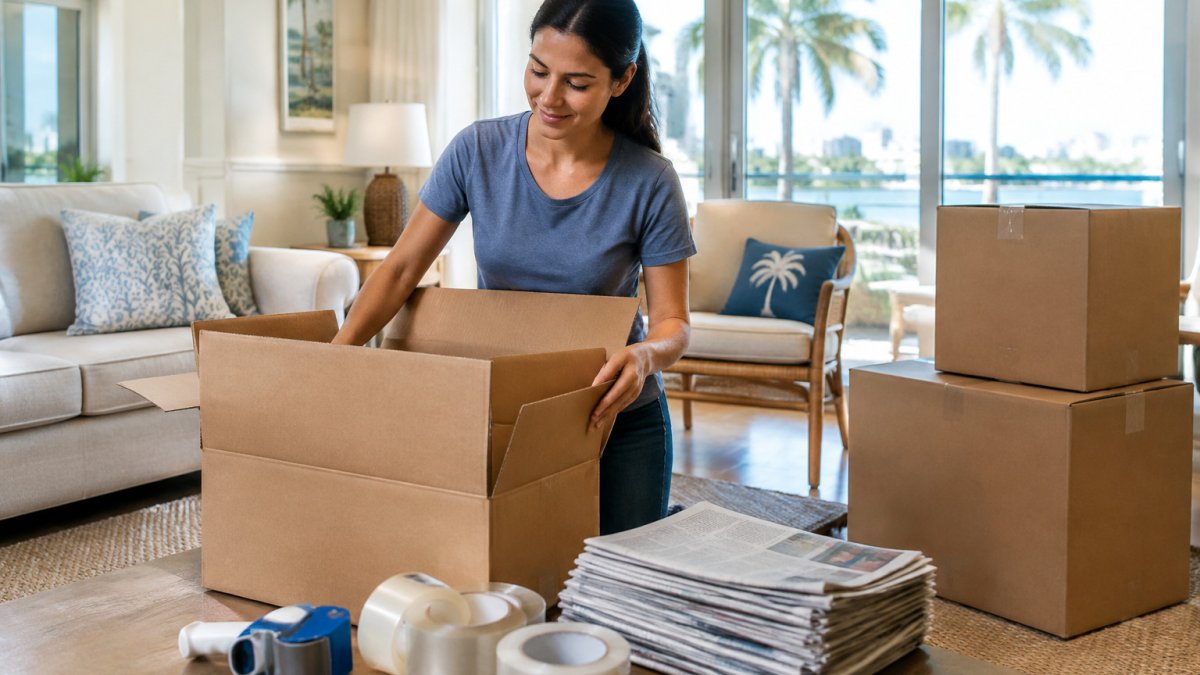
Track what you actually spend on packing supplies so you can see which free and reused options are saving you money.
Where to source free and low-cost supplies:
- Ask grocery, liquor, and bookstores for empty boxes early in the day, before they are broken down.
- Check online community groups and neighborhood apps for giveaways after weekends, when most local moves finish.
- Ask retailers for damaged or display boxes they would otherwise recycle.
- Reuse the boxes you already own from online orders, but only if they are dry and structurally sound.
Watch out: boxes that held produce or liquids can be weak, damp, or carry pests, so inspect every free box for tears, stains, and odor before you trust it with your belongings.
What to Pack First When Moving Apartment
Packing order matters, especially in a smaller apartment. Start with items you rarely use. Seasonal clothes, extra dishes, decorative pieces, and books are good first choices. Pack these in the first week so your everyday life stays normal.
Save the essentials for last. Keep out what you need to eat, sleep, and get ready for work. Set aside a few days of clothes, toiletries, chargers, and basic kitchen tools. Label this box clearly so you can find it fast on moving day.
Label every box with the room it belongs to and a short list of contents. Future you will thank present you when unpacking. Good Movin’ suggests writing the room name in large letters on at least two sides of each box.
How to Pack for a Move in 2 Weeks
A two-week window is enough for a local move if you plan around the one thing that separates a short-distance move from a long one: you can make multiple trips. That changes your packing order.
Here is a step-by-step plan tailored to a local move.
- Days 1-2: Declutter and inventory. Walk each room and sort into keep, sell, donate, and toss. Count large furniture and estimate box counts by room. This is also when you request free boxes from stores and post in community groups.
- Days 3-4: Gather supplies and set up a packing station. Pick one room as your staging area. Set up tape, markers, labels, and paper in one spot so you are not hunting for supplies mid-session. Confirm your truck or container reservation now, since local weekend availability tightens quickly.
- Days 5-7: Pack rarely used rooms and off-season items. Guest rooms, storage closets, garages, seasonal clothes, books, and decorative pieces. Label each box with the destination room and a short contents list on at least two sides.
- Days 8-9: First local trip for low-priority boxes. If you have a car, SUV, or a friend with a pickup, move the already-packed low-priority boxes to the new place now. This reduces the load you need on the final day and lets you start setting up the new space early.
- Days 10-11: Pack the living room, dining area, and bathrooms. Wrap fragile items and keep heavy items in small boxes. Photograph electronics and cable setups before unplugging.
- Days 12-13: Pack the kitchen and remaining essentials. Keep out only what you need for the final two days. Disassemble furniture and bag the hardware, taping each bag to its piece.
- Day 14: Essentials box, final load, and move-day logistics. Pack the essentials box last, confirm parking and building access at both ends, and load the bulk items for the final trip.
Match your transport to the load and the number of trips. A car or SUV works for a studio or a first wave of boxes, but it usually takes several trips and adds fuel and time.
Build a simple move-day checklist and keep it near the door: essentials box packed and labeled; medications, passports, and important papers with you; phone chargers and laptop packed separately; pet supplies and carriers ready; trash bags, paper towels, and cleaning supplies on hand; utility shut-offs and new address confirmed; keys collected for both places. Keep a small bag with snacks, water, tools, and tape accessible.
Watch out: parking and building access are the most common local-move surprises. Confirm whether your old and new buildings require a loading-zone reservation, elevator padding, or a certificate of insurance from any hired help, and check for tolls and parking meters on your route before move day.
The two-week plan breaks down into these stages, each with a timing window:
| Stage | What to do | Timing |
|---|---|---|
| Declutter and inventory | Sort into keep, sell, donate, toss; count furniture and boxes | Days 1-2 |
| Gather supplies | Set up one packing station; confirm truck or container | Days 3-4 |
| Rarely used rooms | Pack guest rooms, closets, garage, seasonal items | Days 5-7 |
| First local trip | Move low-priority boxes in your own vehicle | Days 8-9 |
| Living areas | Pack living room, dining area, bathrooms | Days 10-11 |
| Kitchen and essentials | Keep out only what you need; disassemble furniture | Days 12-13 |
| Final load | Pack essentials box last; load bulk items | Day 14 |
Packing Fragile, Heavy, and Awkward Items Safely
Some items need extra care. Glassware, mirrors, lamps, and electronics can break easily. Heavy items like books and tools can injure your back if handled poorly. Awkward pieces like bed frames and artwork need special wrapping.
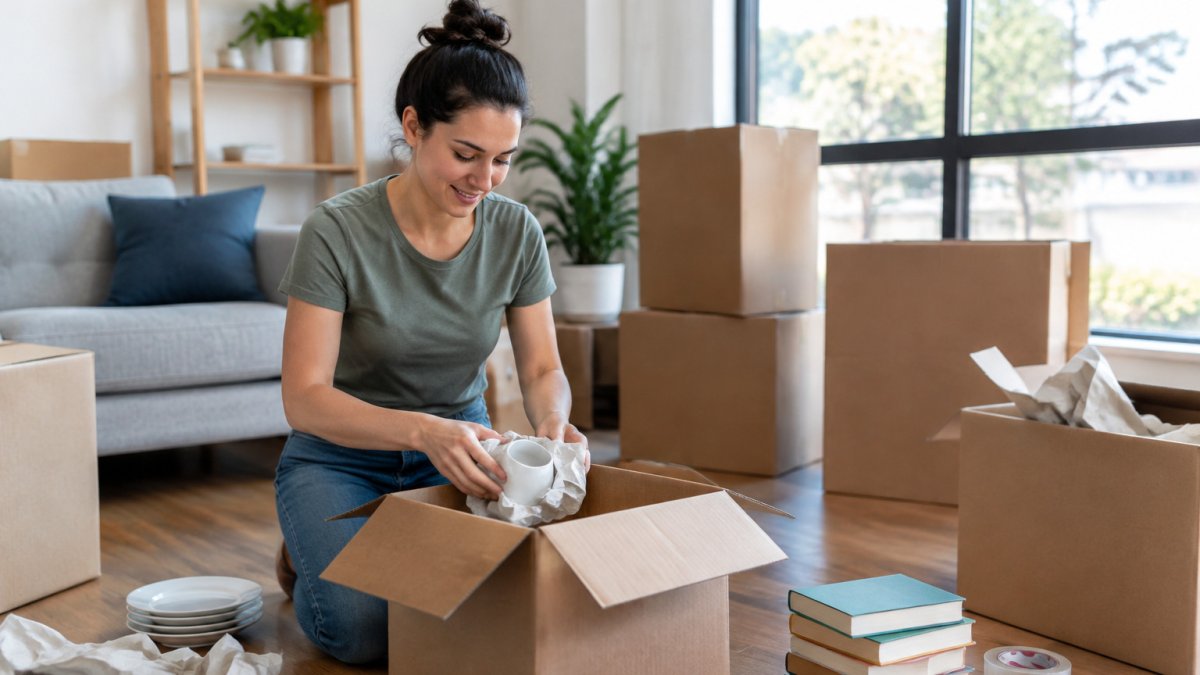
For fragile items, wrap each piece separately. Use towels or bubble wrap, then place them in a box with crumpled paper filling the gaps.
Keep heavy items in small boxes. A box full of books can weigh far more than you expect. Lift with your legs, keep the load close to your body, and ask for help with anything too heavy to carry comfortably.
Take photos of electronics and cable setups before you unplug them. Label each cable with masking tape so reconnecting is quick. Disassemble bed frames and furniture when possible, and store the screws in labeled bags taped to the piece.
A common mistake is overfilling boxes. A box that is too heavy tears at the bottom and gets dropped. Watch out: an overstuffed box is the most likely cause of broken dishes, so fill boxes only to the top edge and no further.
Packing Checklist for Moving Day
Moving day moves fast, so keep a simple checklist nearby. Check these items before the movers or your helpers arrive.
- Essentials box packed and labeled
- Medications, passports, and important papers kept with you
- Phone chargers and laptop packed separately
- Pet supplies and pet carriers ready
- Trash bags, paper towels, and cleaning supplies on hand
- Utility shut-offs and new address confirmed
- Keys collected for the new place and old place
Keep a small bag with snacks, water, tools, and tape near the door. You will reach for these more often than you expect.
Booking Help for the Parts You Don't Want to Pack Yourself
You do not have to do everything yourself. Many people hire help for the hardest parts while packing the rest on their own. Professional packing assistance can save time, especially for fragile or valuable belongings.
Good Movin’ provides full-service moving and labor solutions across Greater South Florida, including packing assistance, specialty-item handling, and storage solutions.
Ask any moving company for a written quote. Confirm what is included, such as labor, packing materials, and insurance. Compare the scope of work, not just the price, so you know exactly what you are paying for.
For questions about current rates or to request a quote for your local move, visit the Good Movin’ website. Our team can tell you which services fit your budget and timeline.
Frequently Asked Questions
How long before a move should I start packing?
For a local move, start packing about two to three weeks ahead if you can. Begin with rarely used items such as seasonal clothing, decor, books, and off-season kitchenware. Leave daily necessities, a few days of clothes, toiletries, chargers, and basic kitchen tools until the final days. Starting early spreads the work out and keeps you from buying supplies at the last minute, which is usually where the budget gets blown.
What are the cheapest packing materials for moving?
The cheapest options are usually free. Grocery and liquor stores often give away sturdy boxes, and local community groups list them for free. Clean newspaper, towels, bedding, and sweaters can wrap dishes and fragile items instead of buying bubble wrap. Plan to buy only what you cannot find free, such as quality packing tape and a few moving boxes for heavy items. Exact retail prices vary by store and quantity, so compare before buying.
Is it cheaper to pack your own belongings before hiring movers?
Packing yourself usually lowers the labor portion of a move, but it only saves money if you pack efficiently and avoid damage. Good Movin' offers professional packing assistance, and pricing depends on the number of rooms, the quantity of items, and the timing of your move. For a current quote, visit the Good Movin' website. Many households split the work, packing clothing, books, and décor themselves while leaving fragile or valuable pieces to professionals.
How can I move a short distance cheaply?
A short local move keeps fuel and mileage costs low, but labor is often the largest expense. You can reduce it by decluttering first, packing everything yourself, and loading a rented truck with help from friends or family. Good Movin' also offers partial services, such as labor for loading and unloading a truck you have rented. Visit the Good Movin' website for current options and a quote tailored to your move.